Albert’s Blog – A BIG 1031 Exchange Misunderstanding
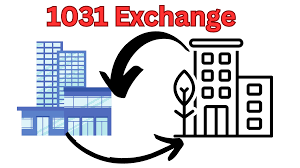
This is an important topic, and while brokers cannot provide tax advice, they can share helpful tax information.
To be clear, no one should rely solely on this article for making decisions or taking action. Investors should always consult a qualified professional for any tax, accounting, or legal matters related to a 1031 exchange.
The goal here is to ensure investors do not miss out on opportunities due to misunderstandings about 1031 rules. Investment sales activity has generally been lower across most of the country compared to the average of the past decade. Common reasons for this decline include current interest rates making deals harder to pencil or challenges in obtaining new financing.
A recent conversation with a sophisticated investor highlighted just how common these misunderstandings can be. This investor, with more than 40 years of experience developing, buying, and selling properties, was initially skeptical about the details shared here. However, after consulting with his accountant, he confirmed the information was correct and expressed appreciation for the clarification.
A widely held belief among brokers and investors is that after selling a property (the downleg), the property being purchased (the upleg) must include at least the same amount of debt and the same amount of equity, or the investor risks ending up with taxable “boot.” (funds that will be taxed)
This is not accurate.
For example, if a $5M property with $2M of debt and $3M of equity is sold, many assume the replacement property must utilize all $3M of equity and include at least $2M of debt. This is not correct.
The correct requirement is that the replacement property (the upleg) must have a purchase price equal to or greater than the property that was sold (the downleg), and all the equity from the sale must be applied. In the example above, selling a $5M property allows the purchase of another $5M property entirely with cash. The debt portion can be replaced with cash, eliminating the need to borrow at high interest rates or deal with restrictive lenders.
Those who already understand this rule are in the minority. The confusion is understandable, as in earlier years it was difficult to imagine structuring deals without debt. For example, when cap rates were at 8% and debt was available at 6%, borrowing made financial sense. Additionally, there was less liquidity in the market at that time.
Investors are encouraged to consider whether they would proceed with a 1031 exchange if borrowing were not required. If the answer is yes, we can provide guidance to help achieve that goal.
References*
Understanding the 1031 Exchange Debt Rules (Realized 1031)
Can I Take Cash Out or Take on Less Debt with My Replacement Property? (First American Exchange Company)
How are Mortgages on Relinquished Property Treated (American Bar Association)
